Arthritis pain can begin suddenly, but it is most likely to develop gradually over time. You may first experience pain when waking up in the morning or when you stand up after sitting for a while. Eventually, you may notice that the pain has taken control over your ability to complete everyday tasks. It may hurt to walk, climb stairs, or even sit down.
You may not be able to bend or straighten your knee as you once could. You may also feel a grinding sensation in your knee or popping and cracking sounds when you walk. Arthritis can even wake you up in your sleep. The appearance of your knee may change and become deformed due to the breakdown of the joint. There may come a time when you decide that you need help.
Please speak with your physician if your symptoms of arthritis are not responding to non-surgical solutions, or your pain can no longer be controlled by medication and is unbearable. The most common surgical knee intervention performed for the treatment of OA (Osteoarthritis) is a total knee replacement. During the procedure, the natural knee joint is removed and replaced with an artificial implant. This treatment option is usually offered to patients with advanced osteoarthritis of the knee.
Knee Arthritis can make everyday life very difficult. There are three types of arthritis that you can have in your knee:
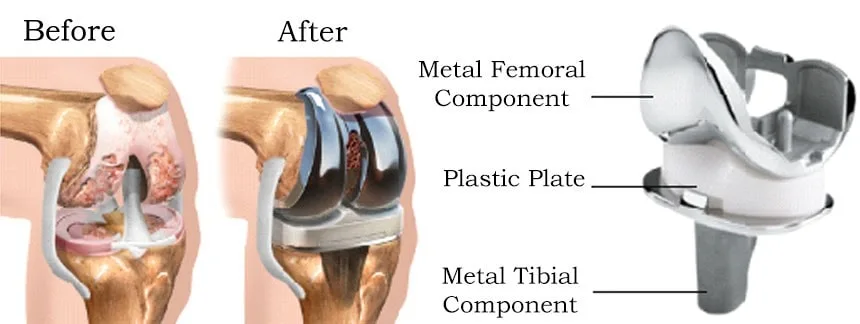
Total Knee Replacement Surgery is an operation in which we do not remove the whole joint; only the damaged surface of the thigh bone (femur) and shin bone (tibia) are shaved off. Often, the underside of the kneecap (patella) is also removed, and these surfaces are replaced with artificial parts. The new joint consists of a metal shell on the end of the femur, a metal plate covered with a plastic trough on the tibia, and if needed, a plastic button on the knee cap. It is an operation where a Knee Joint Replacement Surgeon In Delhi resurfaces the damaged knee joint, as is done in capping a damaged tooth. Living with persistent knee pain can affect every aspect of daily life—from climbing stairs and walking short distances to enjoying favourite activities with family. When non-surgical treatments no longer provide relief, choosing the Best knee replacement surgeon in India becomes essential for achieving long-lasting pain relief and restoring mobility.
If only one part of the knee is damaged by arthritis, you may be recommended for partial knee replacement. This is more so for younger patients. The recovery is quicker, and the hospital stay is shorter. However, the success of the surgery may not last more than 10 years at which point total knee replacement may be suggested by your Knee Joint Replacement Surgeon.
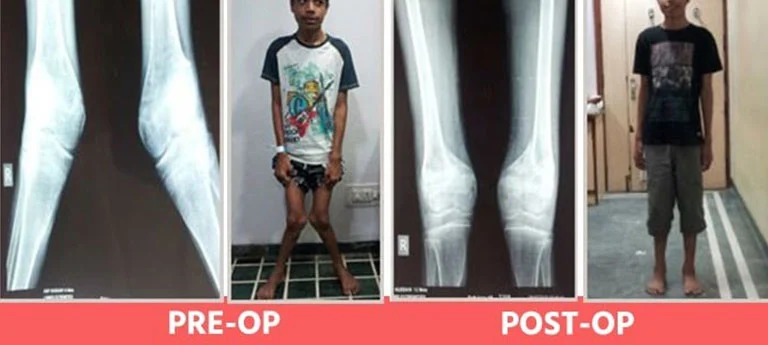
People may have certain deformities of the knee which include bow legs (varus), knock knees (valgus), or even wind-swept legs.
In such cases, the surgeon has to be well-experienced in handling such cases and should also have had considerable experience with revision joint replacement surgeries as well. See below Images.
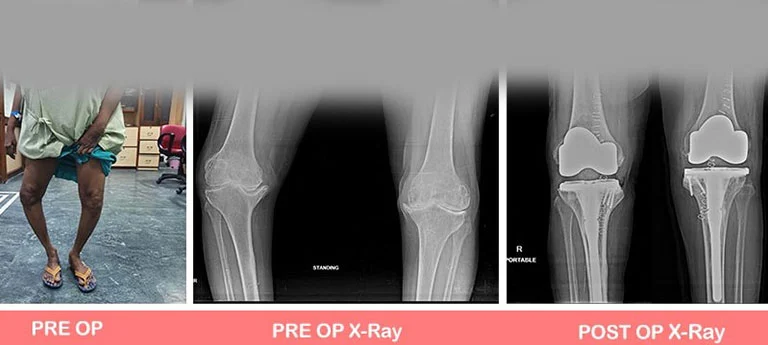
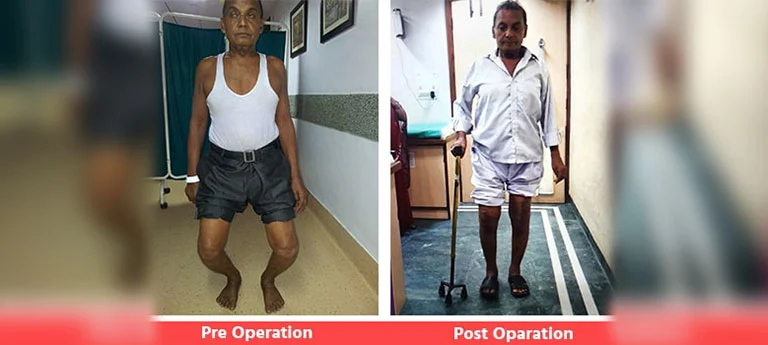
1. Bow Legs (Varus Knee)
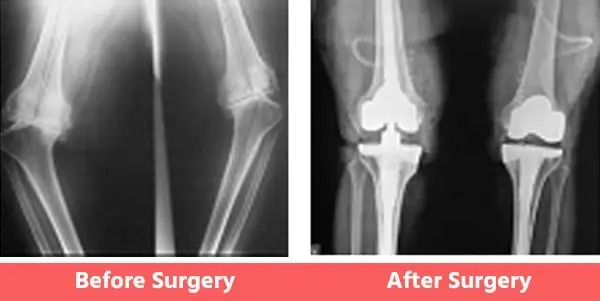
2. Knock Knees (Valgus)
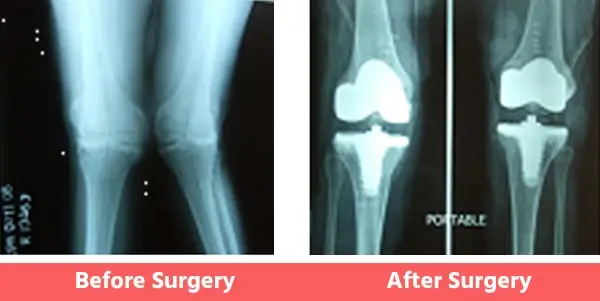
3. Wind Swept Legs
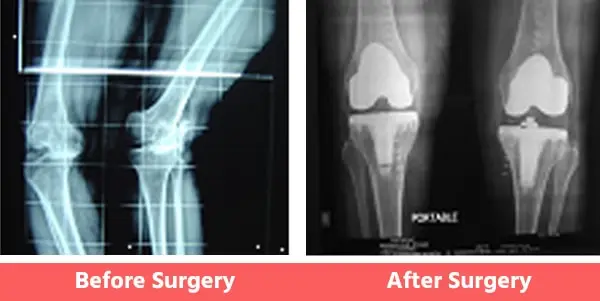
In such cases, the surgeon has to be well experiences in handling such cases and should also have had considerable experience with revision joint replacement surgeries as well.
Knee Replacement surgery is an elective procedure, your doctor has more than likely treated your condition with physiotherapy, pain medicines, anti-inflammatory drugs, and injections in the knee. You may also have had minor surgeries of your joint in the past.

Continuing life with all these disabilities is possible. However, your unstable joints may cause a fall and lead to fractures around the knees and hips because of osteoporotic bones. Regular consumption of pain medication and anti-inflammatory drugs may also damage your kidneys and cause ulcers in the stomach.
You and your doctor or Knee Joint Replacement Surgeon will be the best judge of when knee replacement surgery is best for you.
Once your new joint has completely healed, you will reap the benefits of knee replacement surgery.
Full Knee Movement After Surgery

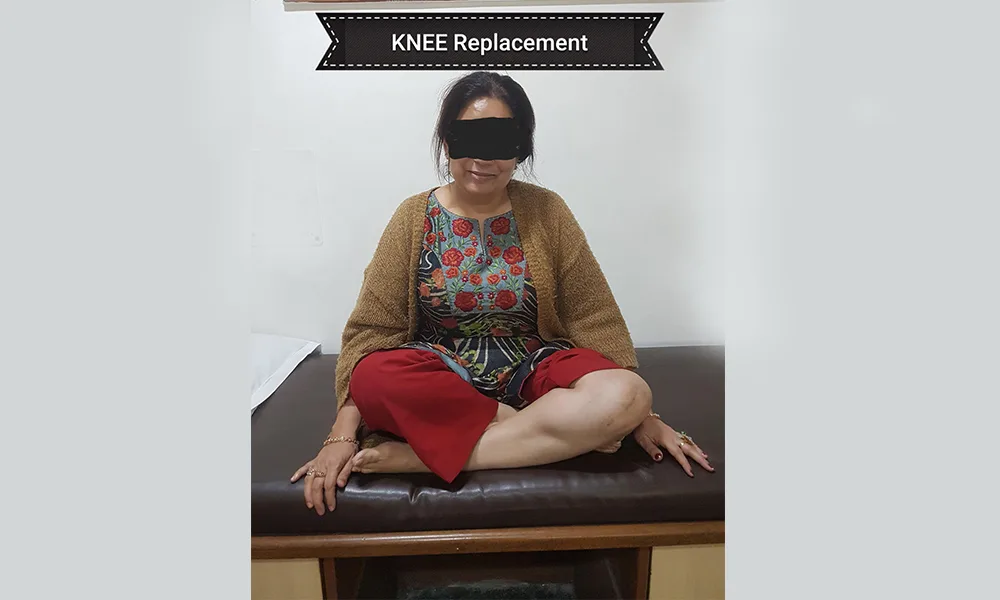
Can I Sit Cross Leg Or Squat After Surgery
Knee replacement is a life-changing decision that requires careful planning and consideration. A person undergoing knee replacement surgery must take into account several factors. While the basic steps of knee replacement surgery are very similar, many factors depend of the patient’s medical history, the surgeon’s experience and preferences, as well as the type of knee implant used.
The person undergoing surgery must also ensure that he or she has support at home after surgery. A person who has undergone total knee replacement surgery will take several months to completely heal and will need assistance at home initially for even the basic activities. However, over time, and with good physiotherapy, the muscles around the knee will strengthen and the person will find that he can do things he or she never thought they could do.
It is a surgery that offers hope and concrete results for those living with chronic pain and disability.
After knee replacement surgery, it is important to keep your weight under control. This will reduce the amount of pressure and stress on your knew knee. Avoid high impact sports and participate regularly in low impact activities to strengthen your knees and get the exercise you need to stay fit. Looking for an experienced knee surgeon in Delhi? Dr. Shekhar Srivastav is a Head of Department & Senior Consultant – Orthopaedics, specializing in knee and joint replacement, robotic knee replacement, knee arthroscopy, sports medicine, and advanced treatment for various knee conditions
When advanced knee arthritis, persistent knee pain, stiffness, or difficulty walking affects your quality of life, choosing the right Knee Replacement Hospital in Delhi is an important decision. Dr. Shekhar Srivastav is the Head of Department & Senior Consultant – Orthopaedics at Sant Parmanand Hospital, Kashmere Gate, Delhi, where patients can receive specialized evaluation and treatment for complex knee conditions.
Dr. Shekhar Srivastav specializes in knee replacement procedures, including total, partial, revision, and robotic-assisted knee replacement surgery. Treatment is planned according to the patient’s joint condition, symptoms, medical history, and mobility requirements.
Patients searching for the Best Knee Replacement Hospital in Delhi NCR often consider factors such as experienced orthopaedic specialists, advanced surgical techniques, hospital infrastructure, rehabilitation, and comprehensive patient care. Sant Parmanand Hospital, Kashmere Gate, provides the hospital setting where Dr. Shekhar Srivastav practices as Head of Department & Senior Consultant – Orthopaedics.
If knee pain is affecting your walking, sleep, stairs, work, or daily activities, a specialist consultation can help determine whether non-surgical treatment or knee replacement is appropriate.
The following questionnaires provide you and your family with information regarding Total Knee Joint Replacement Surgery/Operation and answer many of your questions and guide you for a successful operation. It discusses surgical procedure risks and benefits of Surgery, preparation before surgery, and post-operative care thereafter.
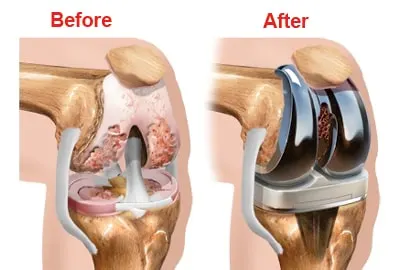
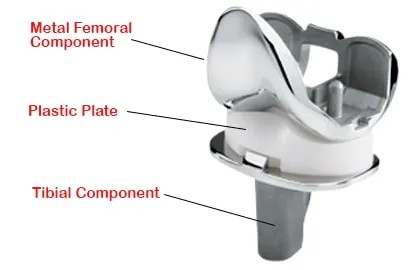
Total Knee Replacement is an operation in which Knee Joint Replacement Surgeons do not remove the whole joint; only the damaged surface of the thigh bone (femur) and shinbone (tibia) is shaved off. Often,the underside of the kneecap (patella) is also removed, and these surfaces are replaced with artificial parts. The new joint consists of a metal shell on the end of the femur, a metal plate covered with a plastic trough on the tibia, and if needed, a plastic button on the kneecap. It is an operation where one just resurfaces the damaged knee joint, as is done in capping a damaged tooth.
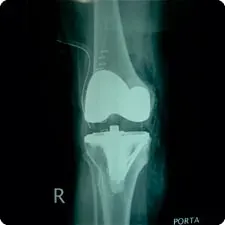
X-Ray of Replaced Total Knee
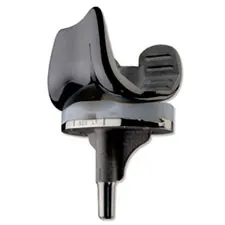
Total Knee Implant
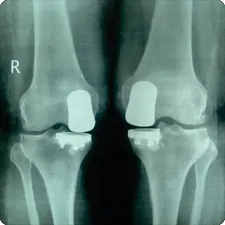
X-Ray of Replaced Uni Condylar Knee
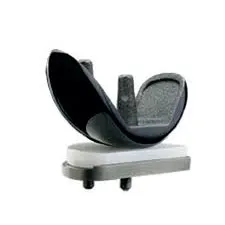
Uni Condylar Knee Implant
This surgical technique also recommended for patients that suffer from other morbidities such as coronary artery disease, obesity and diabetes as well as those patients who already have pre-existing hardware in the joint such as presence of nail, screws etc.
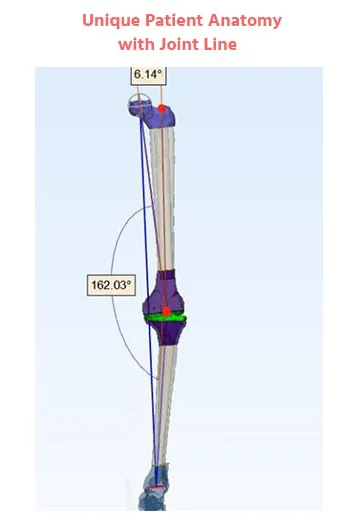
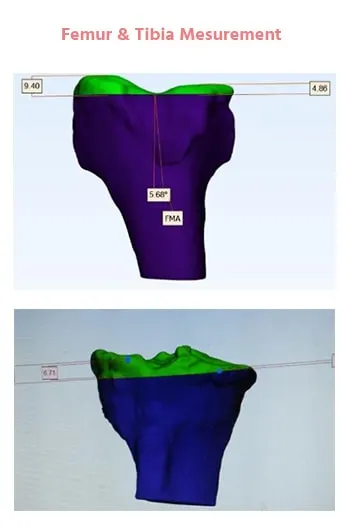
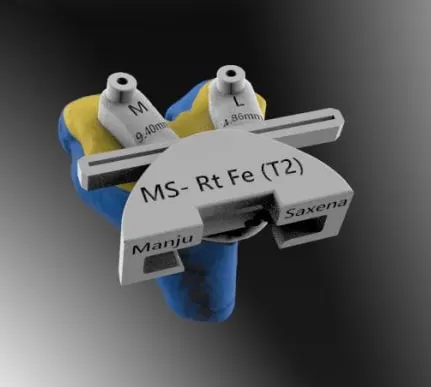
Femur Matched Instrument
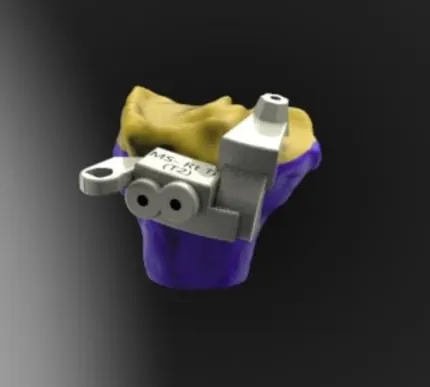
Tibia Matched Instrument
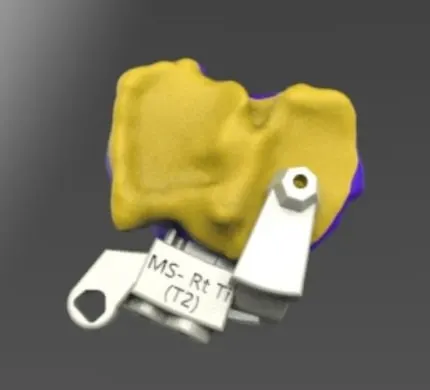
Tibia-Matched Instrument (Top-View)
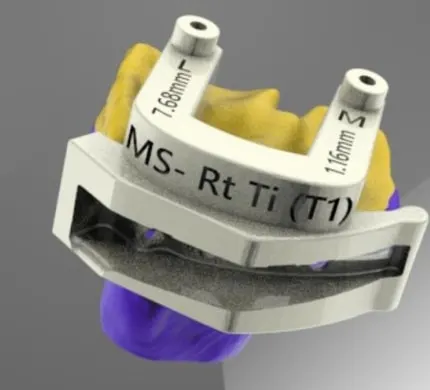
Tibial Matching
You and your doctor are probably the best judge of when you will finally need total knee replacement surgery.
Some Common Deformities
1. Bow legs (Varus)
2. Knock Knees (Valgus)
3. Wind Swept Legs
You can see illustration and X-Ray images shown above already.
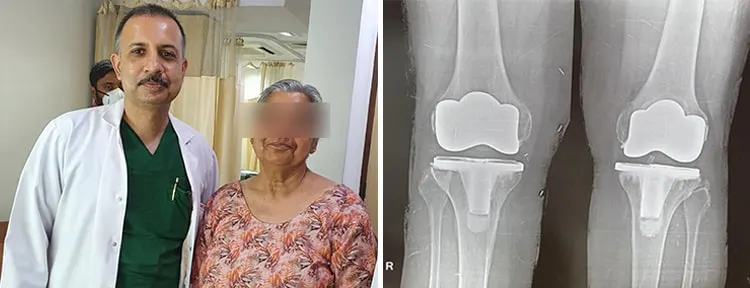
Both Knee Replaced Simultaneously By Dr. Shekhar Srivastav at Sant Parmand Hospital
Your Knee Joint Replacement Surgeon and therapist may modify these goals somewhat to fit your particular condition. If there are no complications after surgery, most patients stay in our hospital approximately for 1 week or less.
After a conventional implant for Total Knee Replacement, a person can typically walk comfortably and his knee joint will have a good range of motion. However, sitting cross-legged and squatting is not advised. If a person opts for a Hi-Flex knee implant, the range of motion of the knee is better allowing him to sit cross-legged. We (Knee Joint Replacement Surgeon) would generally suggest that you do not squat as it is based on individual muscle strength and fitness level. Your doctor will advise you on the activities that you will be able to do comfortably.
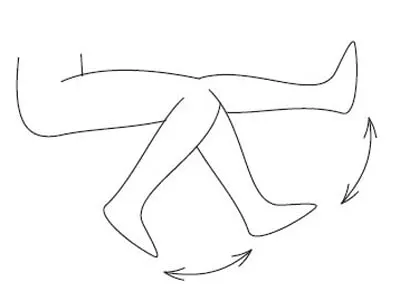
After Conventional Total Knee Replacement
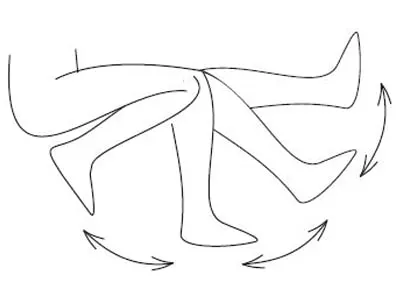
After Hi-Flex Total Knee Replacement